Don’t Post This
An interview with Lester Trips (Theatre) by Claren Grosz

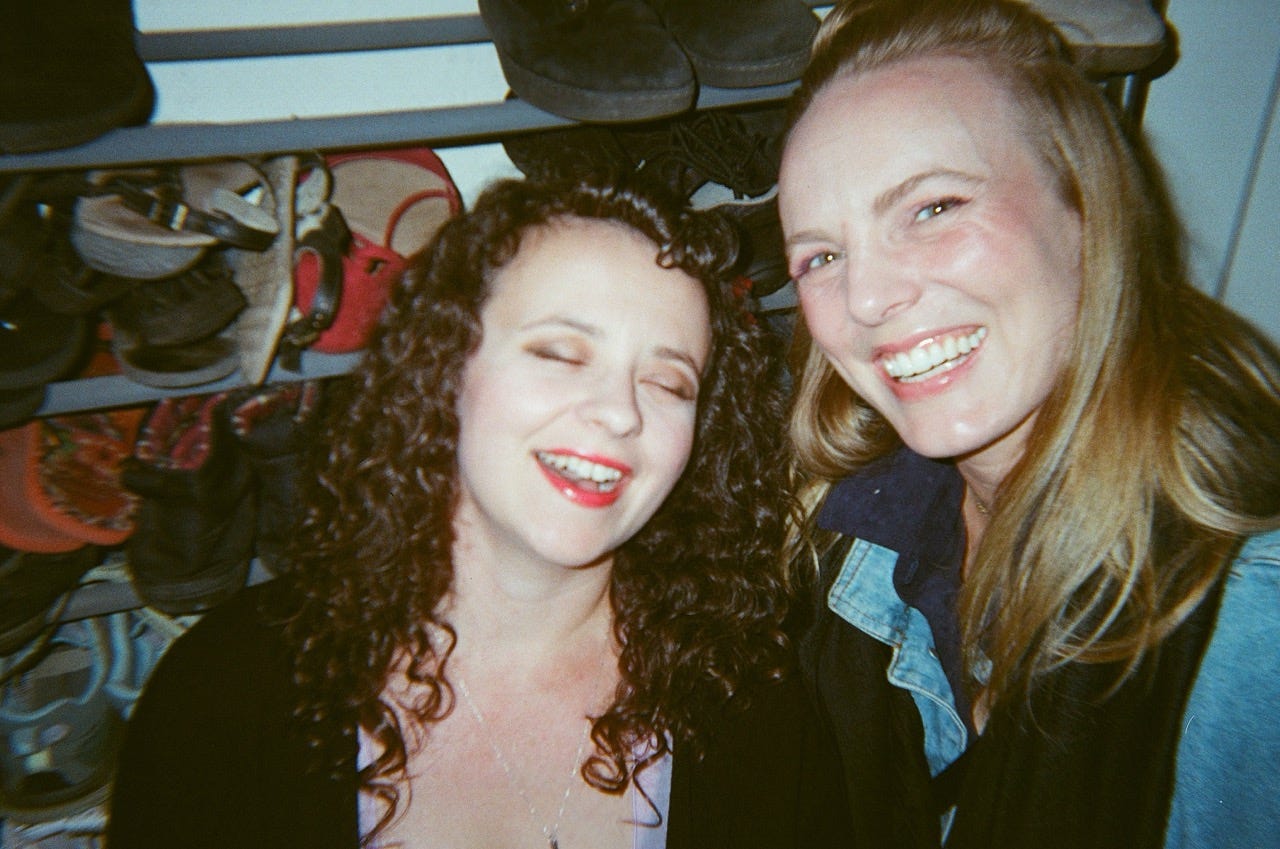
Lester Trips are elusive artists. Comprising Lauren Gillis and Alaine Hutton, Lester Trips is known for making brain bending, weird-ass art. And they let that art do the talking for them. When it comes to revealing more about themselves as the people behind the art, they keep their cards close to their chest.
“I was never much of a public chatter.” Says Gillis.
“You’re not much of a private chatter.” Hutton calls out from the Factory Theatre dressing room, where she’s de-drag-ifying herself following the promotional shoot for their upcoming show, Public Consumption.
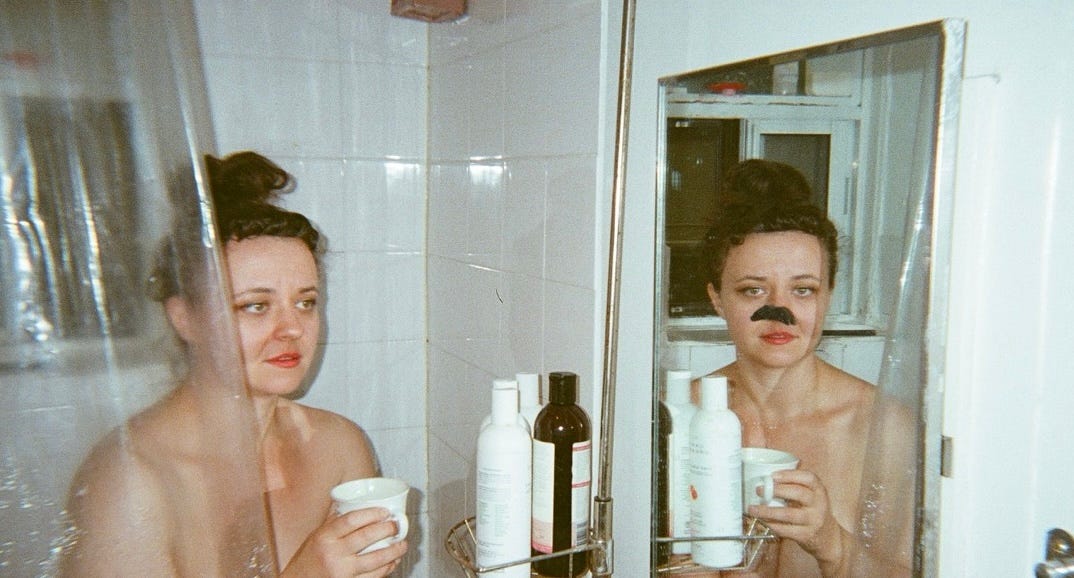
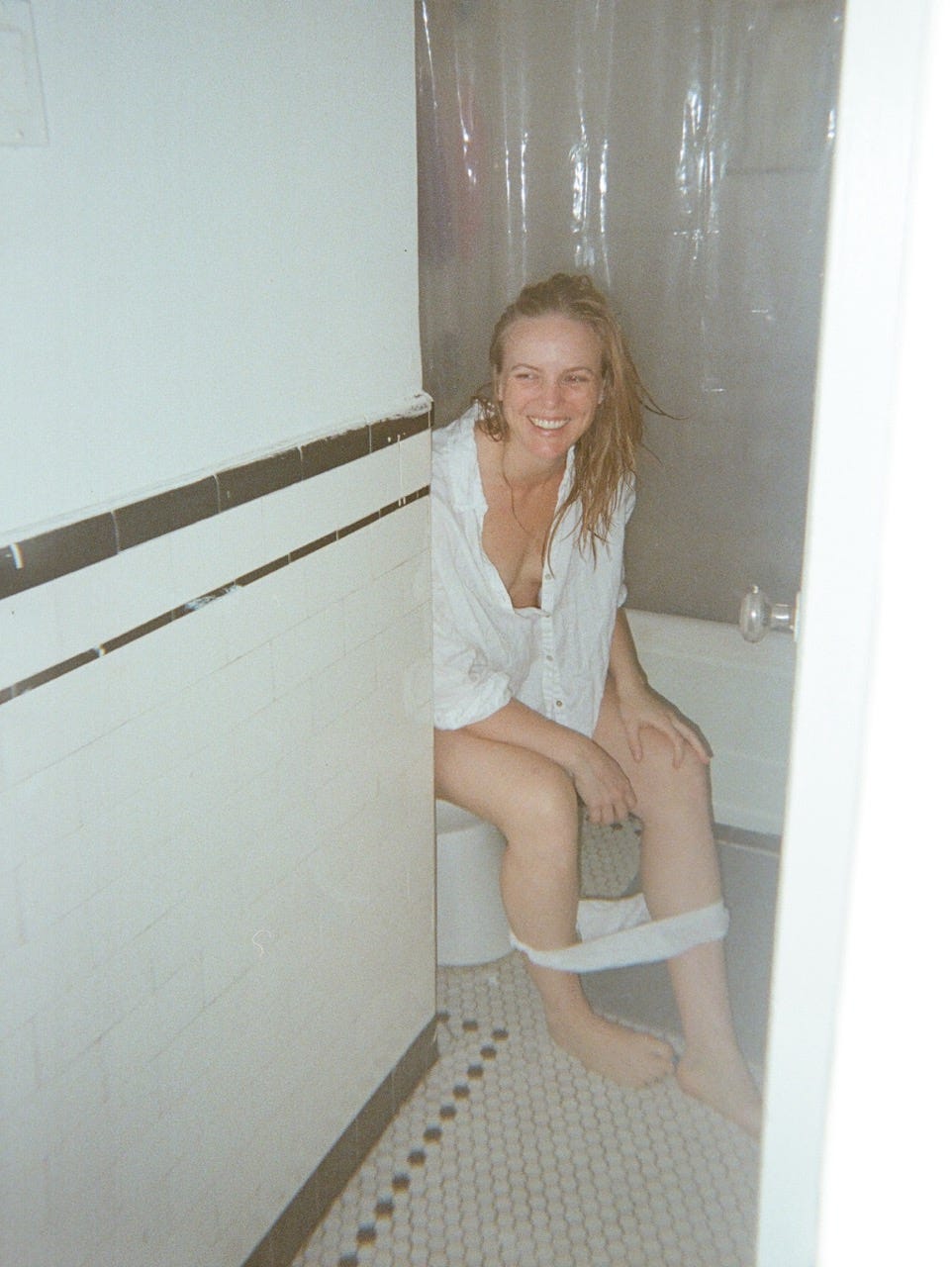
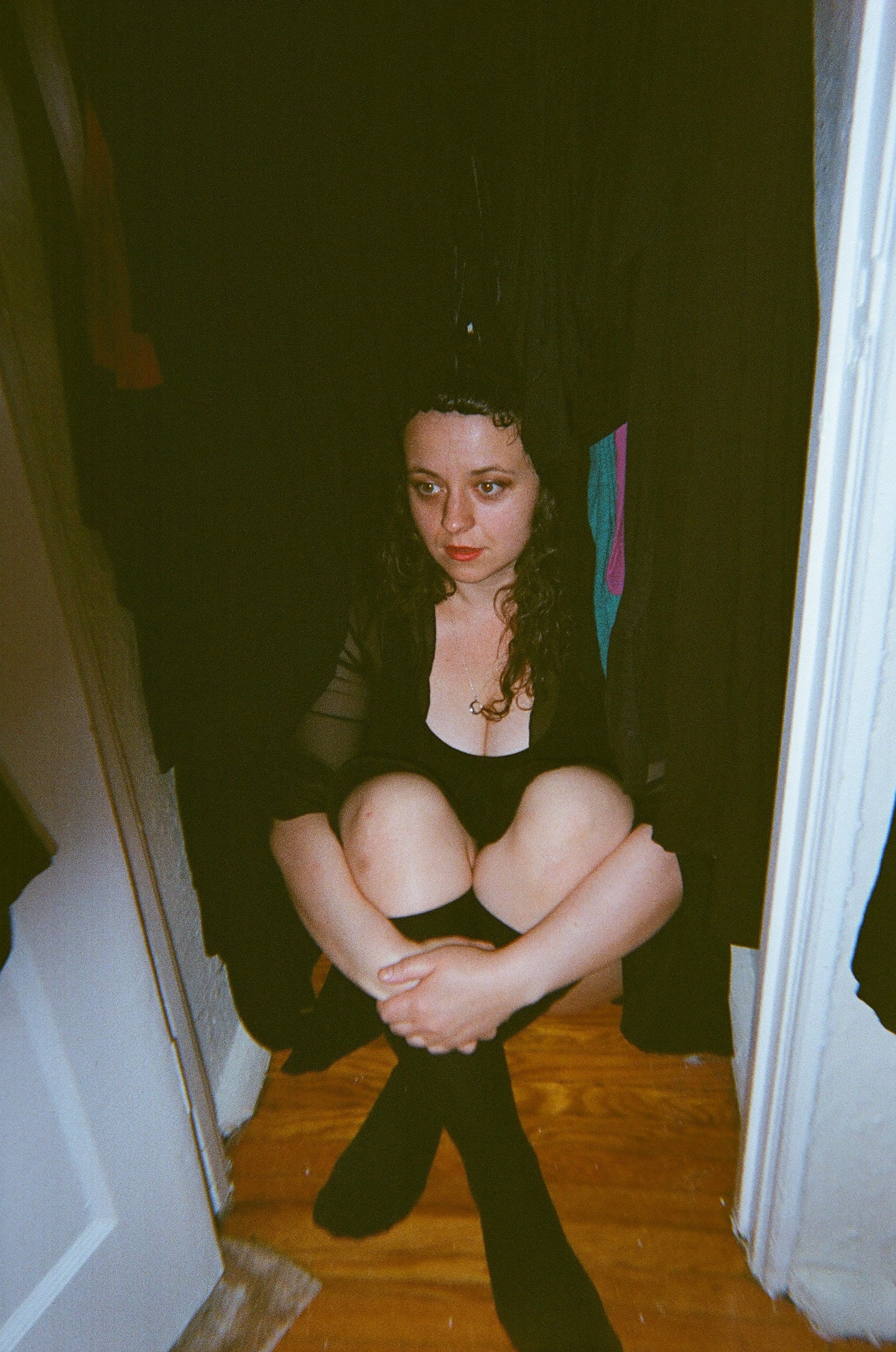
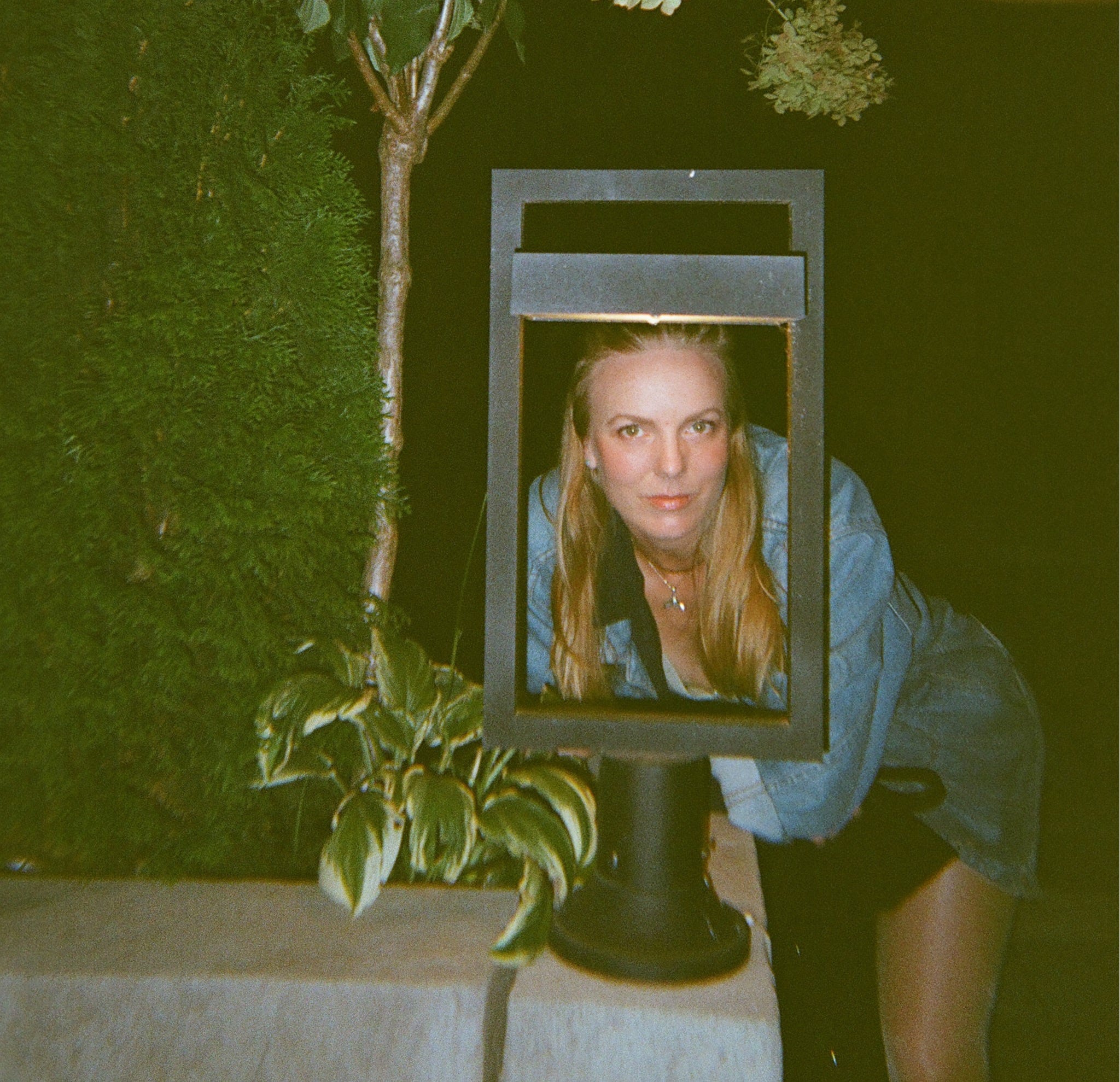
Private people, Lester Trips aren’t ones for social media. Gillis doesn’t even have an Instagram account. When handed a disposable camera and told to fill it with photos of their personal lives for the purpose of sharing on the great wide web, their eyes widen.
“It’s mostly just out of pure fear.”
That’s what Gillis says when asked why she takes pains to keep her public persona enigmatic.
“Because the internet is forever until we don’t care anymore and we’re too thirsty and we shut down all the servers because we need water. I haven’t felt comfortable on the internet since grade five. Back then, nobody was going to dox you for something you posted. Nobody was going to come to your house the next day. But that’s a cop-out answer because even then, I had lurker proclivities.”
Getting a sit down interview, then, feels like a rare opportunity. One I’m especially excited for as someone who’s been invested in Lester Trips’ kind of lewd, satirical storytelling ever since I saw Safe and Sorry at the SummerWorks festival in 2019. In the show, Gillis and Hutton play a men’s dating coach (a pickup artist by any other name) and his swarm of students who are clearly suffering from acute loneliness with zero tools for genuine human connection and turning it into a nightmare for everyone else. Gillis and Hutton investigate this easily dismissed subculture with genuine curiosity and earnestness. They have a knack for taking a close, uncomfortable look at realities many of us would prefer not to engage with, and presenting them in a way that surprises, terrifies and somehow also delights.
When asked whatever happened with Safe and Sorry, Gillis tells me, “We had to take our unhealthy preoccupation with incels and their spiritual advisors to the animated realm in the form of 3D earwigs.”
That checks out. Lester Trips is a multimedia creative force – you can catch their mini television series Content Farm on CBC gem. It’s a great example of how unhinged their work is, and how impressive their transformative powers are as performers. The wig store hates to see Lester Trips coming. Having Content Farm on CBC gem also provides an opportunity for their work – which is usually created for the ethereal, fleeting world of live theatre – to live on for an extended time.
“You put all this time into creating a man, and then he just all comes off in ten minutes.” Hutton laments, as she un-becomes Navy – the pompous, insufferable antihero of Public Consumption who Hutton inhabits with the help of a men’s suit and contour.
Public Consumption follows Navy Caine, nepobaby teetering on the verge of the Hollywood A-list, when he is convicted of sexual assault and dodges an inconvenient 120-day house arrest by gambling on a pilot project that randomly assigns undesirable labour in return for a shorter sentence. He consequently enters the dystopic nightmare world of content moderation.
“The provocation was, wouldn’t it be fun if a famous actor who was accused and convicted of sex crimes then had to read hundreds and thousands of pages of bot-generated erotic fan fiction? He’d hate it. He’d hate it!”
The show is a sequel of sorts to HONEY I’M HOME, Lester Trips’ critically acclaimed sold out show from the 2024/25 Factory Theatre season.
“It’s part of a body horror trilogy that’s all about Work Sucks. The through line is Work Sucks. It is. And someone told us recently, he said, ‘It can’t just be about Work Sucks.’ And I said, ‘Really? I’ll show you.’
“No, but seriously, both pieces are about how digital work is untenable for the human body against the backdrop of Artificial Intelligence that is both useless and glorious. Both plays have a lonely person spending all their time with an annoying AI. In Public Consumption, the person is more of an angry, entitled lonely person and the AI is more charming.”
If Gillis herself had to be reborn as an AI?
“I think it would be cool to be an unconventional generative sex bot. You wouldn’t have to have your consciousness locked in a single human body. You could expand your nervous system to take in other sensory modalities encompassing objects and atmospheres, people and creatures. You could be a sexual context.”
Whether it’s deep diving into AI, deepfake, incel subculture, or cringe eroticism, Lester Trips is often dealing in the taboo and walks the edge of what is “okay” to say, to put on stage or screen.
“I’m an awkward person. So I often find I’ve accidentally tread onto the banal unacceptable. Easily. And from there, if you go a few steps to the left, it becomes disgusting or taboo. And people get incensed. I’m a very disgust-forward person. There’s a lot of interesting stuff to be found along the edge between feeling awkward and feeling disgusted... disgusted by smells, morally disgusted, disgusted by unfairness or disgusted by what seems to just be excessive, indulgent, irrational.
“Right in my immediate experience, there are so many edges that I don’t feel like I’m looking for an edge. I’m always finding myself there, unintentionally. Everything just feels very tenuous. Like, we could just fall off at any moment and people would scream in your face, ‘Oh my God, how dare you? How could you? How could you? No, no.’”
And is it possible to go too far?
“As long as whoever is offering the taboo image or the idea can say, ‘No, I’ve felt this. And then I just moved it two or three degrees more theatrically distant,’ then it’s not too much. It’s still tethered to the personal experience of disgust or discomfort, either seeing something that is unacceptable or being told that you are something that is unacceptable.”
How does one build a room that feels safe to take creative risk?
“Custom. You custom build it, I think. And you have to think about the difference between being safe and feeling safe. If you’re being safe, you should ask a paramedic and they will advise you, don’t repair your own roof. Feeling safe, I think, is very subjective. You have to find the particular weirdos that have an endless burning desire to ask the similar question. And then conduct a long-term experiment into what processes cause your nervous systems to be the right amount of activated.”
What kind of process can Gillis’ nervous system handle?
“Depends what I’m doing. If I’m in a performance role, I think as long as I get a little heads up to, like, make sure I have the right underwear, I’m good with whatever. If they’re like, ‘We need you to go into a back bend, and slide along a slick floor on your back upstage and then you need to jump up into the air and then you need to sing’? That’s different than ‘We need you to crawl underneath the stage in darkness and then we need you to crawl, crawl through the darkness, silently, silently, slowly, slowly, for 35 minutes, crawling. Until you’re revealed.’ This is different, right? This is different undies. Different undies.
So what processes can’t they work with?
“Hyper-politeness. There are certain types of politeness that are like a facade of easygoingness. Unspoken rules, and hidden secret limits. Landmines everywhere. Social landmines. That’s the nightmare. Also, texts where you can’t cut the text. I can’t do it. I just have no respect for the written word. Or rather, the word is as important as a light fixture, which is as important as a gesture, which is as important as the texture of a paint treatment. They’re all equal.”
Indeed, Lester Trips’ work lives on the stage not the page. Reading their scripts hardly captures the multimedia magic of what happens when all the design elements come together. In Public Consumption, part of this carefully crafted collage of images and impressions is footage from a laparoscopic camera exploring ear canals and nasal pathways.
“The insides of noses and ears look like beautiful... underwater... alien... feminine... caves. If you get a clear shot of a human eardrum, it is so beautiful. It looks like it looks like a pupiless eye. It looks like an amniotic lens. If you haven’t looked more than two centimeters up a nose, the walls are shockingly close. It’s the sense of ‘I feel like I’m going outside as I’m going inside.’”
When asked if there’s any piece of art or media that she’s found especially inspiring recently, Gillis opens up Kanopy on her laptop and goes to her watched films. It’s almost all horror films. Or horny films. Horror, horny, and horribly horny horror films. She sighs and shuts her laptop.
“I’m not sure. You know what, I’ll give a shout out to one of my favourite video essays of all time, which really gets deep and funny into the shittiness of corporate VR and is an absolute joy to watch. It’s The Future is a Dead Mall - Decentraland and the Metaverse by Folding Ideas.”
Lester Trips have been laser focused for the last few years on the ways the internet, deepfake, VR, and AI are shaping our lives in all sorts of perverted ways. What is it about the internet that is so alluring and terrifying?
“You never know. None of us knows, algorithmically, which piece is going to hit. You’re throwing pennies in a wishing well. And then what? One penny breaks through and a whole bunch of people see it. Putting something out on social media is offering yourself to the void to say, I Am This. I Want This. But even in an almost mystical way, an image or a post is putting your cosmic penny in the digital wishing well. And you never know when it could become your destiny.”
For two people who are very particular about what pennies they throw into the ether, they’ve been especially generous for the purpose of this article. I leave feeling grateful that they’ve bestowed on me this wonderfully compromising digital footprint of an interview. I hope it goes viral. There are worse things than being remembered as a creative genius who can perform just about anything provided they have the right undies.